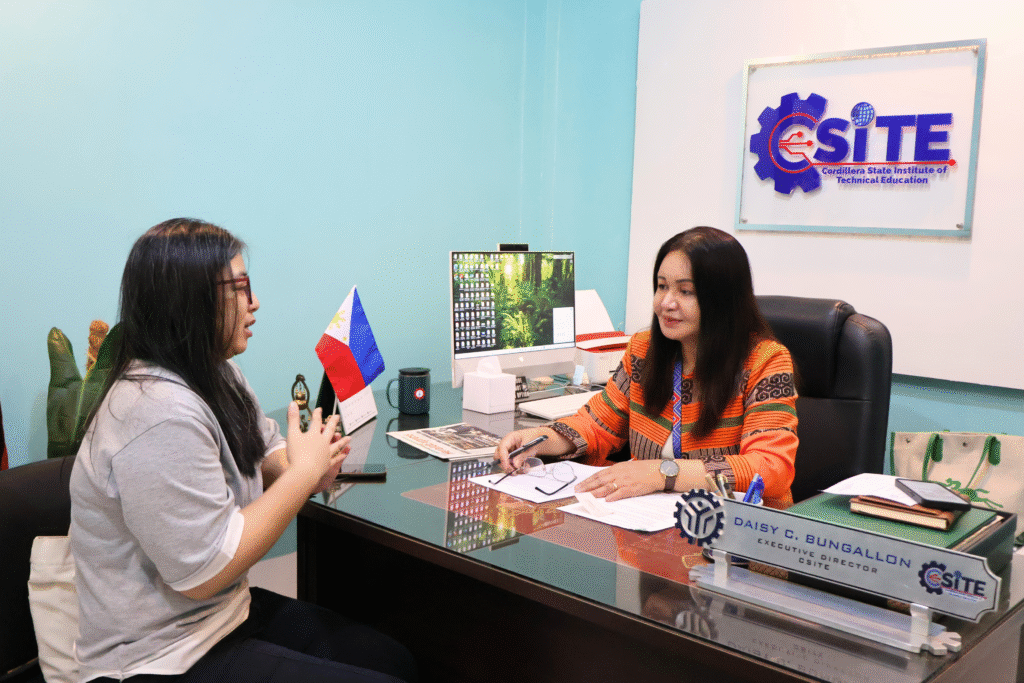
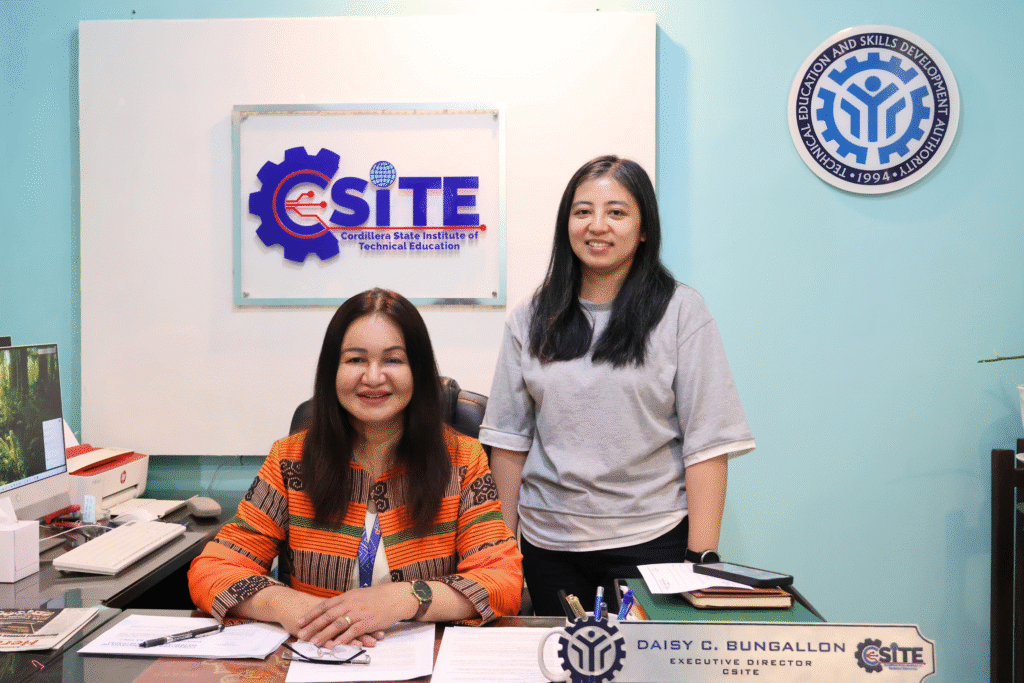
The Cordillera State Institute of Technical Education (CSITE) provided institutional insights into the governance, operations, and financial management of an integrated technical-vocational institution during a research interview conducted by The Asia Foundation on June 29, 2026.
Led by researcher Jennifer Godio, the study gathered executive perspectives on the creation and continuing implementation of the CSITE model. The interview featured CSITE Executive Director Daisy C. Bungallon and formed part of a broader research initiative examining how institutional integration has influenced governance, service delivery, resource management, and coordination across TESDA-administered campuses.
The discussion explored the circumstances that led to the establishment of CSITE, including the governance challenges experienced by formerly independent training centers and the rationale for legislative integration as the institutional framework for managing multiple campuses under a unified system.
ED Bungallon explained that integrating the campuses established a common governance structure that strengthened institutional planning, accountability, resource management, and program coordination while maintaining alignment with national Technical-Vocational Education and Training (TVET) priorities. She noted that the model has enabled campuses to share expertise, improve coordination, and optimize institutional resources despite continuing geographical and logistical challenges.
The interview also examined how integration has affected budgeting, staffing, procurement, facilities management, scholarship implementation, and quality assurance. While centralized planning has improved institutional coordination and reduced duplication of efforts, discussions acknowledged that distance among campuses continues to require responsive communication systems and effective resource allocation mechanisms.
As part of the research, the study examined CSITE’s current operating environment, including its program offerings, industry partnerships, scholarship implementation, and community-based initiatives. Participants also discussed the respective roles of TESDA Regional and Provincial Offices in policy guidance, oversight, and institutional coordination.
In addition to discussing the current CSITE model, the interview also explored its future institutional direction, including the proposed transformation into the Cordillera State Polytechnic Institute (CSPI). Executive Director Bungallon shared the vision behind the proposal and its potential to transition the region toward comprehensive, multi-disciplinary technological mastery, strengthen workforce development, and establish a legally mandated, ladderised baccalaureate pathway for students in the Cordillera. The discussion formed part of the broader exchange on the continuing evolution of the institution into an autonomous polytechnic ecosystem designed to meet the demands of the Fourth Industrial Revolution.
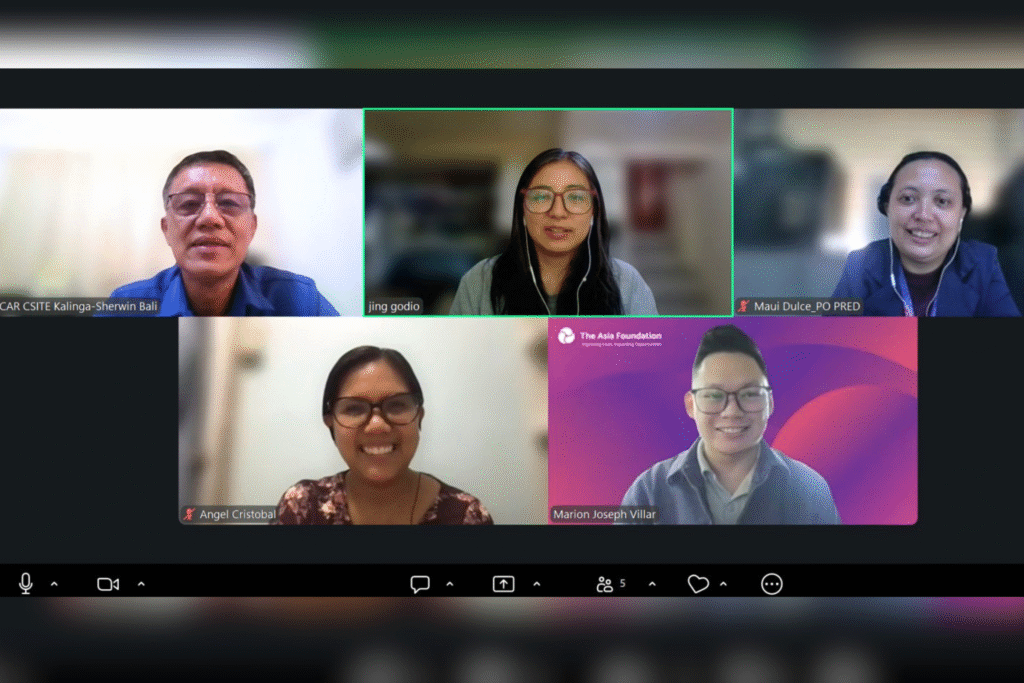
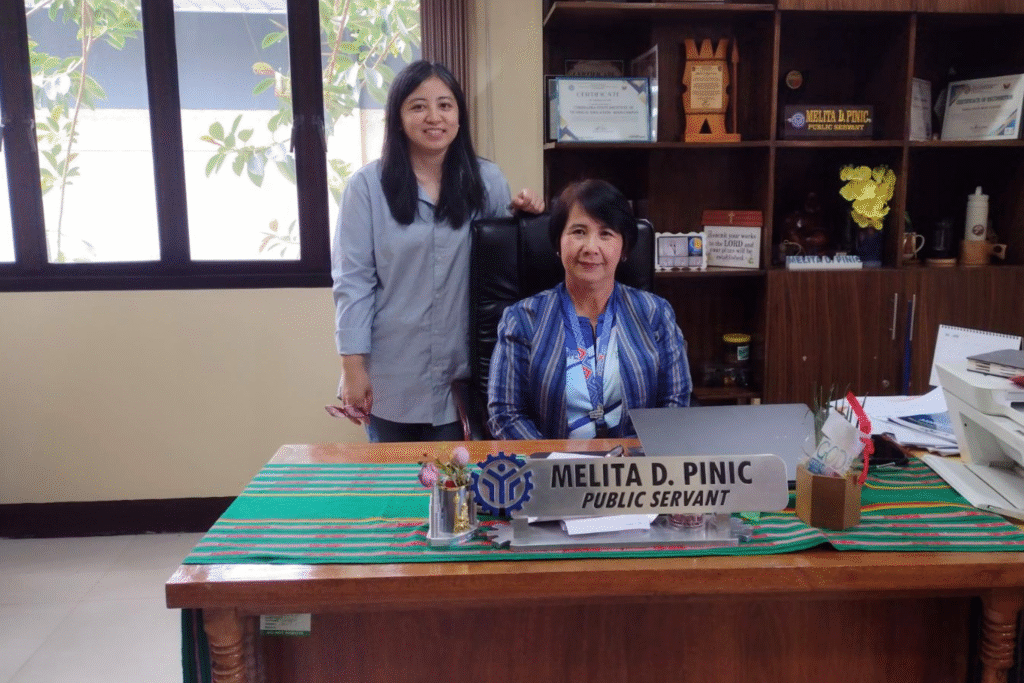
The research also gathered perspectives from Acting Campus Administrator Melita Pinic of the CSITE Main Campus in Baguio City and Campus Administrator Sherwin Bali of the CSITE Kalinga Campus to provide a broader understanding of how institutional integration is implemented across different campuses.
The executive interviews contribute valuable field-based insights to ongoing research on institutional integration in technical-vocational education, offering practical lessons that may help inform future policy discussions on governance, resource management, and the continuous improvement of public TVET institutions.
###
#SaTESDAKayangKaya #GanapsaTESDACSITE